Stroke in Children

A stroke occurs when a blood vessel that carries oxygen and nutrients to the brain is either blocked by a clot or bursts (or ruptures). When that happens, part of the brain cannot get the blood (and oxygen) it needs. So it and brain cells die.
While most have heard of stroke in adults, strokes can happen at any age. Pediatric strokes can happen in infants, children, teens and even before birth. The two age ranges when referring to pediatric stroke are perinatal and childhood.
Perinatal stroke can happen in the last few months of pregnancy to 1 month old.
- Congenital heart disease
- Placenta disorders
- Blood clotting disorders
- Infections (e.g., meningitis)
Childhood stroke can happen between 1 month old to 18 years.
- Congenital heart disease
- Diseases affecting the brain’s arteries
- Infections affecting the brain or other organs
- Head trauma
- Sickle cell disease
- Autoimmune disorders
What are the warning signs for pediatric stroke?
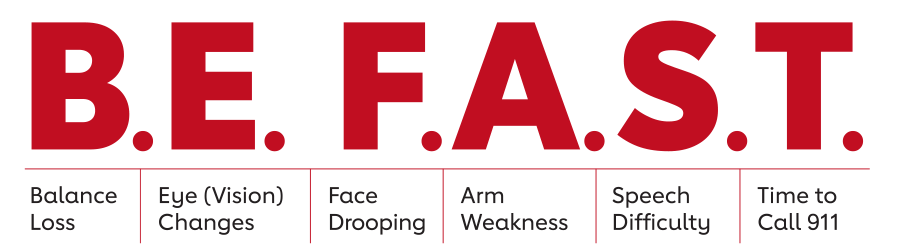
B = Balance Loss
Is there a sudden loss of balance or coordination? Is the person having trouble walking or experiencing dizziness?
E = Eye (Vision) Changes
Are there sudden changes in vision? Ask the person if they are experiencing blurred vision, double vision, or loss of sight in one or both eyes.
F = Face Drooping
Does one side of the face droop, or is it numb? Ask the person to smile. Is the person's smile uneven?
A = Arm Weakness
Is one arm weak or numb? Ask the person to raise both arms. Does one arm drift downward?
S = Speech Difficulty
Is speech slurred or difficult to understand? Ask the person to repeat a simple sentence.
T = Time to Call 911
If you have any of these symptoms or see someone else having them, call 911 immediately!
If your child has one or more of these signs, don’t delay — call 911 immediately.
Warning signs in children can include:
- Severe sudden headache, especially with vomiting and sleepiness
- Sudden weakness or numbness on one side of the body (face, arm and/or leg)
- Sudden confusion, difficulty speaking or understanding others
- Sudden trouble seeing in one or both eyes
- Sudden difficulty walking, dizziness, loss of balance or coordination
- New onset of seizures, usually on one side of the body
Prompt action and medical treatment can maximize outcomes. Remember that stroke is a potential risk for everyone.
Pediatric Stroke Causes

Many unanswered questions remain about pediatric stroke. Critical step is to raise awareness that stroke can happen at any age.
Effects of Stroke in Children

A stroke normally affects one side of the brain. Although every stroke is unique, strokes tend to affect survivors in common ways.
Recovery and Treatment for Pediatric Stroke

Each child recovers differently from stroke. Early diagnosis can lead to earlier treatment when brain plasticity may be greatest.
Sickle Cell Disease
Pediatric Stroke Resources Available
The American Stroke Association and the International Alliance for Pediatric Stroke (IAPS) have collaborated to provide these resources:
- ASA’s Scientific Statement on the Management of Stroke in Neonates and Children
- Let’s Talk About Children and Stroke
- Pediatric Stroke Infographic
- Infografía sobre el ataque o derrame cerebral pediátrico
- Perinatal Stroke Infographic
- Infografía sobre el ataque o derrame cerebral perinatal
- Check out Alex’s stroke story (video)
- Watch Rhys’s stroke story (video)
- Learn about the importance of spreading awareness (video)
- IAPS’s Pediatric Stroke Tool Kit (available in English and Spanish)

Join the Support Network
